Pour son premier enregistrement chez Pentatone, la mezzo-soprano Daniela Mack compose un portrait musical intime de l’Argentine, de Buenos Aires et de la mémoire, en faisant du tango un territoire de réconciliation entre l’enfance, l’exil et l’identité artistique. Son programme réunit dix pages d’Astor Piazzolla (1921-1992), « Vuelvo al Sur », «Yo soy María », « Poema Valseado », « Los pájaros perdidos », « Chiquilín de Bachín », « Balada para un loco », « Los paraguas de Buenos Aires », Jacinto Chiclana », « Oblivion » et « Balada para mi muerte », ainsi que « Dulces sueños » de Juan Pablo Jofre (né en 1983), bandonéoniste, compositeur et arrangeur de l’album. La voix de Daniela Mack possède la discipline, la projection et la maîtrise du phrasé d’une grande chanteuse lyrique, mais elle sait également abandonner la rigidité du récital classique pour laisser entrer dans le chant le mordant du tango, la parole, le souffle et une certaine théâtralité. Les chansons, pour la plupart écrites par Piazzolla avec des poètes majeurs du monde argentin et hispanophone, prennent ainsi une dimension narrative particulièrement forte avec Horacio Ferrer (1933-2014), poète et parolier emblématique du compositeur, Fernando Solanas (1936-2020), cinéaste et homme politique argentin, Jorge Luis Borges (1899-1986), l’un des écrivains argentins les plus importants du XXe siècle. Cette constellation d’auteurs donne au disque une profondeur littéraire qui empêche le tango de se réduire à une simple affaire de rythme ou de couleur. La mezzo-soprano y assume pleinement l’excentricité, les ruptures de ton et l’ambivalence entre lyrisme amoureux et folie poétique, avec une liberté qui rappelle combien Astor Piazzolla voulait faire éclater les catégories. Cependant, l’une des grandes réussites de « Sur » tient à son orchestration, car plutôt que de chercher à reproduire artificiellement l’ampleur orchestrale de certaines versions de Piazzolla, JP Jofre construit un écrin chambriste autour de la voix, avec son quintette comprenant notamment Eric Silberger au violon, Amy Kang au violoncelle, Pablo Cafici au piano et Chris Johnson à la contrebasse, tandis que Jofre tient le bandonéon. Cantatrice accomplie, de Mozart à Haendel, Rossini, Bellini, Verdi, Bizet et Korngold jusqu’à la création contemporaine, Daniela Mack chante le tango sans jamais renoncer aux exigences du chant lyrique. Son articulation, son sens du texte, la densité de son médium et son instinct dramatique lui permettent de conserver une identité populaire tout en acquérant une véritable ampleur de récital. Une réussite absolue, indispensable et incontournable qui hantera longtemps les mémoires.
Jean-Jacques Millo For her first recording with Pentatone, mezzo-soprano Daniela Mack paints an intimate musical portrait of Argentina, Buenos Aires, and memory, using tango as a space for reconciliation between childhood, exile, and artistic identity. Her program features ten works by Astor Piazzolla (1921–1992): “Vuelvo al Sur,” “Yo soy María,” “Poema Valseado,” “Los pájaros perdidos,” “Chiquilín de Bachín,” “Balada para un loco,” “Los paraguas de Buenos Aires,” “Jacinto Chiclana,” “Oblivion,” and “Balada para mi muerte,” as well as “Dulces sueños” by Juan Pablo Jofre (born 1983), the album’s bandoneonist, composer, and arranger. Daniela Mack’s voice possesses the discipline, projection, and mastery of phrasing of a great opera singer, but she also knows how to set aside the rigidity of the classical recital to let the bite of tango, speech, breath, and a certain theatricality into her singing. The songs—most of which were written by Piazzolla in collaboration with major poets from the Argentine and Spanish-speaking worlds—thus take on a particularly strong narrative dimension through the work of Horacio Ferrer (1933–2014), the composer’s iconic poet and lyricist; Fernando Solanas (1936–2020), an Argentine filmmaker and politician; and Jorge Luis Borges (1899–1986), one of the most important Argentine writers of the 20th century. This constellation of authors lends the album a literary depth that prevents the tango from being reduced to a mere matter of rhythm or color. The mezzo-soprano fully embraces the eccentricity, the shifts in tone, and the ambivalence between romantic lyricism and poetic madness, with a freedom that reminds us just how much Astor Piazzolla wanted to shatter conventional categories. However, one of the great successes of “Sur” lies in its orchestration, for rather than seeking to artificially reproduce the orchestral grandeur of certain versions by Piazzolla, JP Jofre crafts a chamber-music setting around the voice, with his quintet featuring Eric Silberger on violin, Amy Kang on cello, Pablo Cafici on piano, and Chris Johnson on double bass, while Jofre plays the bandoneon. An accomplished opera singer—from Mozart to Handel, Rossini, Bellini, Verdi, Bizet, and Korngold, all the way to contemporary works—Daniela Mack sings tango without ever compromising the demands of operatic singing. Her articulation, her understanding of the text, the richness of her mid-range, and her dramatic instinct allow her to retain a popular identity while achieving the true depth of a recital performance. An absolute success—essential and unmissable—that will linger long in the memory.
Translation Lawrence Schulman | 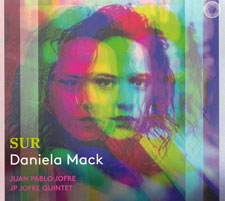 |